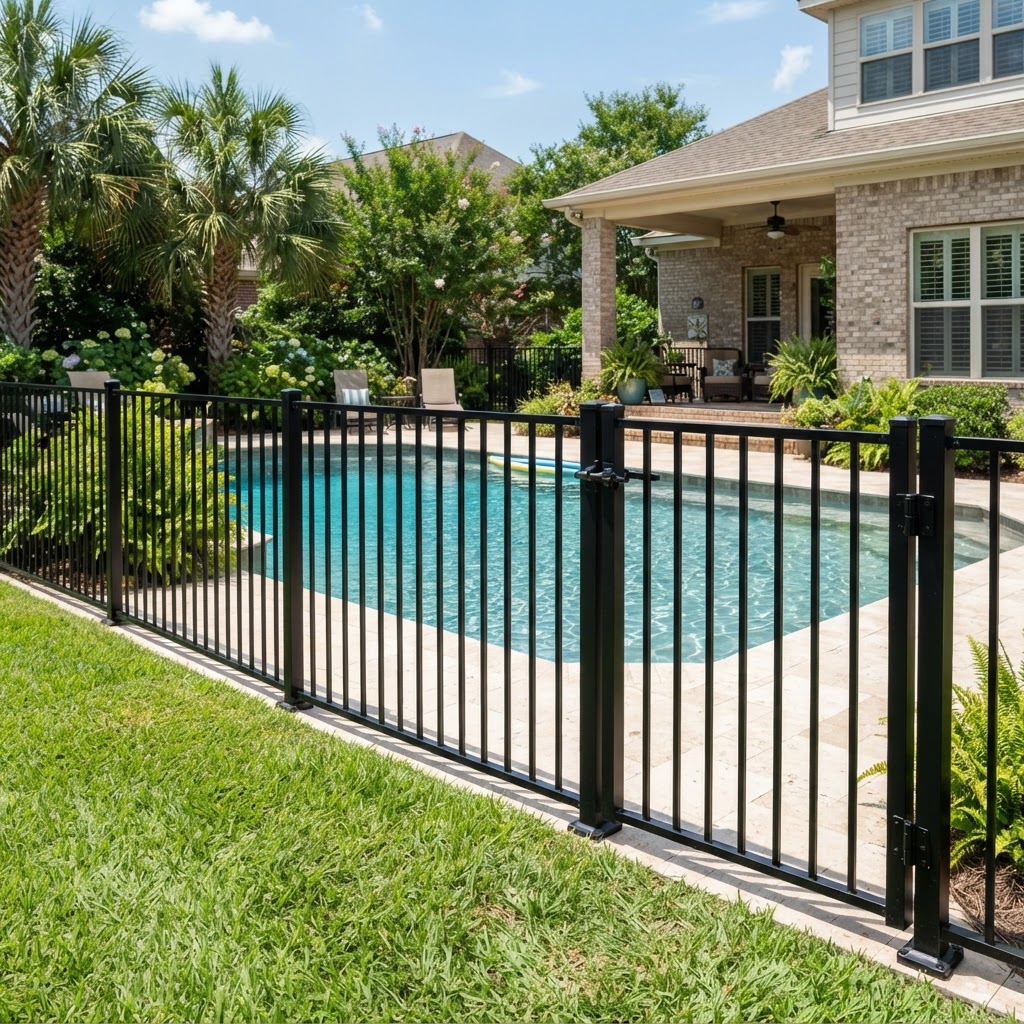
A backyard pool is a major investment in your family's lifestyle — and a serious responsibility. North Carolina and South Carolina both enforce pool safety codes, and fencing is at the center of them. Here's what Carolina homeowners need to know before, during, and after pool fence installation.
Why Pool Fencing Is Non-Negotiable
Drowning is the leading cause of accidental death for children ages 1 to 4 nationwide. A properly installed pool fence reduces young children's drowning risk by more than 80%. Beyond the human cost, an unfenced pool can expose you to liability and may void parts of your homeowner's insurance policy.
North Carolina Pool Fence Requirements
North Carolina's residential code follows the national safety standard: barriers must be at least 48 inches high, with no gaps larger than 4 inches. Gates must be self-closing and self-latching, with the latch positioned at least 54 inches from the ground on the pool side. Local counties and municipalities — including Cumberland and Wake counties — can add stricter requirements, so verify your city's rules before installation.
South Carolina Pool Fence Requirements
South Carolina follows similar guidelines: a 48-inch minimum barrier, self-latching gates that swing outward, and no climbable features within reach of the fence top. Charleston and Columbia area municipalities often layer HOA aesthetic rules on top of state code, which means material and color choices may be regulated in your neighborhood.
Best Materials for Pool Fencing
- Aluminum: The most popular pool fence in the Carolinas — won't rust in humidity, open design resists wind, elegant look
- Vinyl: Complete privacy, zero maintenance, no rot in wet poolside conditions
- Mesh safety fencing: Removable panels that protect kids and pets between swim seasons
- Chain link with privacy slats: The most budget-friendly compliant option
Common Compliance Mistakes
The most frequent violations we see are DIY gates that don't self-close, fences anchored to decay-wooden posts, and gaps at the bottom exceeding 4 inches on sloped lots. House walls can sometimes count as part of the barrier, but any door from the house to the pool area must have an alarm. These details are exactly what inspectors check.
Get It Right the First Time
A pool fence that fails inspection costs you twice. Our team installs code-compliant pool fencing across North and South Carolina and handles the permit process from start to finish. Request a free estimate and let's make your pool safe, legal, and beautiful — before swim season starts.